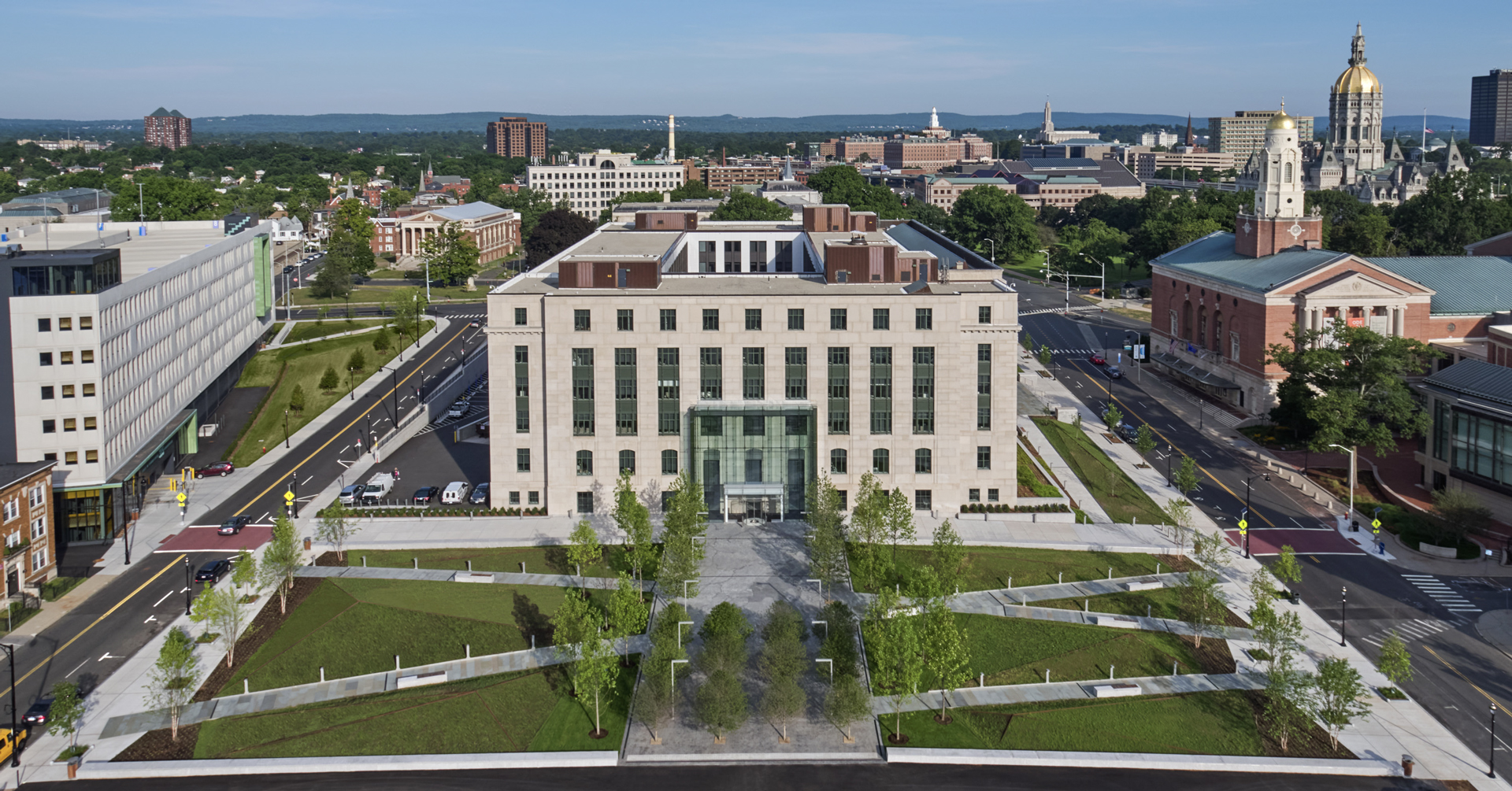
The challenge often facing owners of aging buildings is how to transform them into assets that serve evolving needs. At Amenta Emma, we believe the most sustainable solution with older structures goes beyond investing in preservation and high-performance energy systems, it creates space where people want to work, live, or play and strengthens a building’s community. Transformational renovations and successful adaptive reuse can turn a building in decline into a valuable long-term asset.
Our work in reimagining Hartford’s largest public office building at 165 Capitol Avenue (aka the “State Office Building”) from a “white elephant” into a modern workplace, supports this position. Built in 1931 opposite the Connecticut State Capitol, the 350,000 gsf structure served as home to multiple state agencies. Though it had a classic 1930s era limestone exterior common to civic architecture of the period, along with art deco interior detailing and original finishes, the building had deteriorated into what one state official called “a rabbit warren, with offices within offices, within offices.” The exterior featured 370 window ac units and a site layout that effectively had no relationship with its urban context. Despite its formal expression, a 3’ wide “side entry” door served as the primary entrance which opened into a narrow corridor. The entry was symbolic of the reality the once “grand” building was not valued as an asset or that its architectural design had the power to uplift its users or passersby.
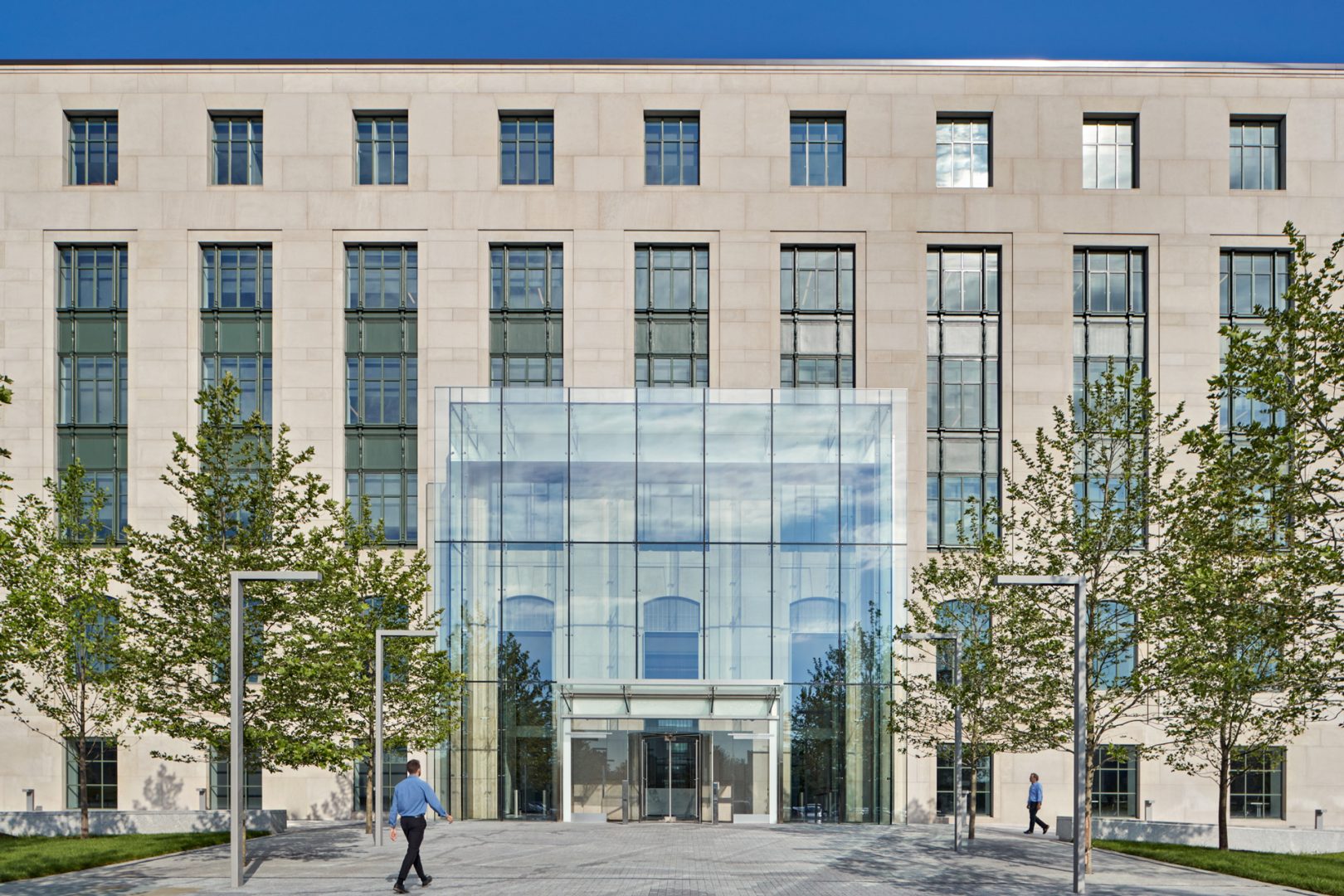
A two-story “glass box” faces the green space and visually connects to the courtyard and new two-story lobby clad in white natural stone.on
Fortunately, based on an Amenta Emma facilities conditions assessment and planning study, the State realized the building offered opportunity as a long-term workplace asset, as a dynamic member of a mixed-use neighborhood, and as an anchor in promoting development on the fringe of the “downtown” core. In turn, the State committed significant funding investment in the building’s future.
Designing for Longevity Requires Honest Assessment
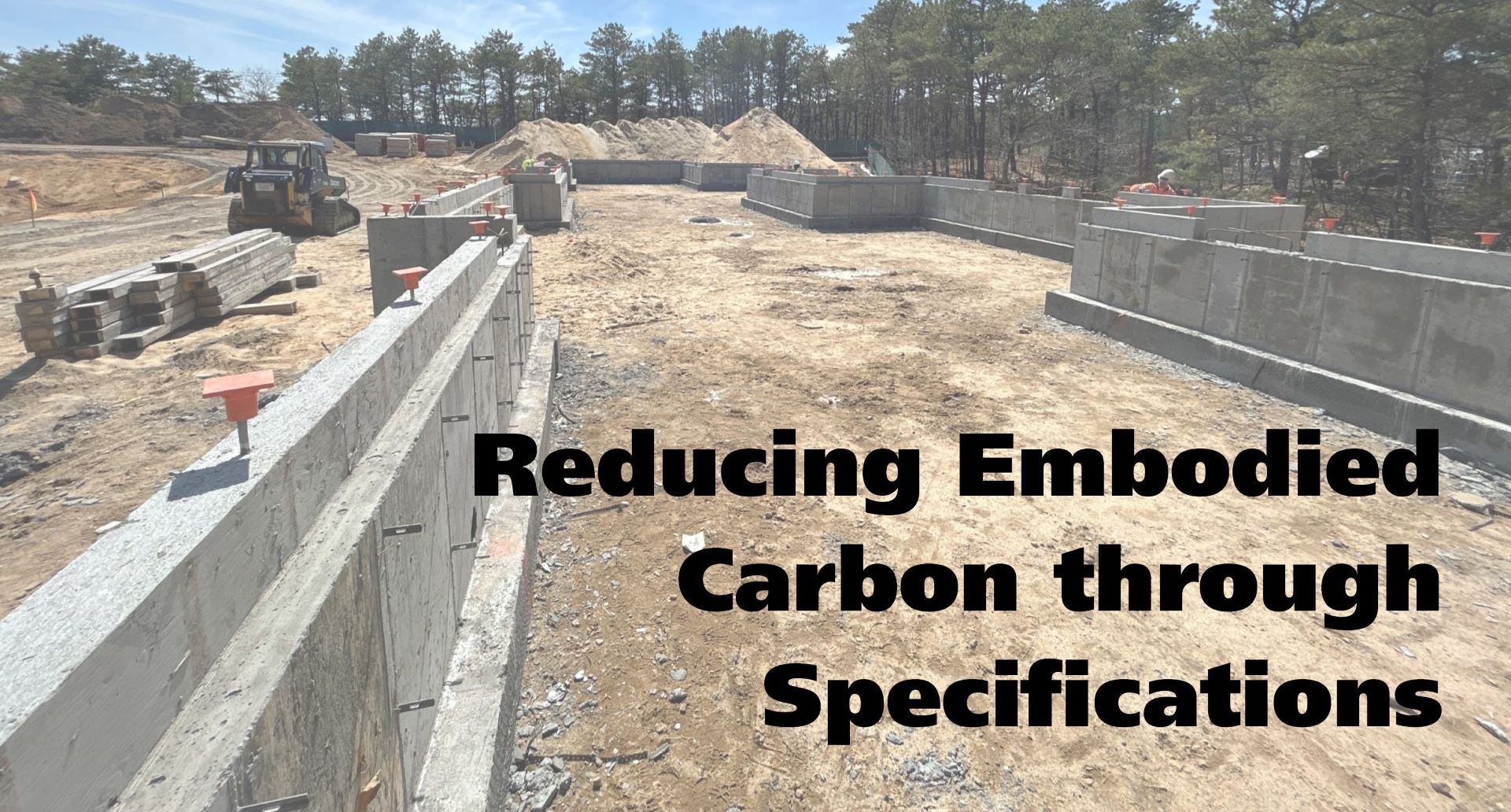
Renovations require making hard choices on what to preserve and what to transform. At 165 Capitol Avenue, 95 percent of the existing structure was saved retaining approximately 3,720 metric tons of carbon embodied in the structure while completely transforming the interior and building systems. While a driving vision was to rebrand the building, historic elements including two monumental staircases and the art deco detailing and finishes of a major corridor were faithfully restored. The maze of small rooms across every level, however, was demolished and replaced with open work areas and a minimal number of enclosed offices. As the new workplace for Connecticut’s constitutional officers, (Secretary of State, Treasurer, Comptroller, and Attorney General) the reconfiguration met the needs of each group while allowing flexibility for change.
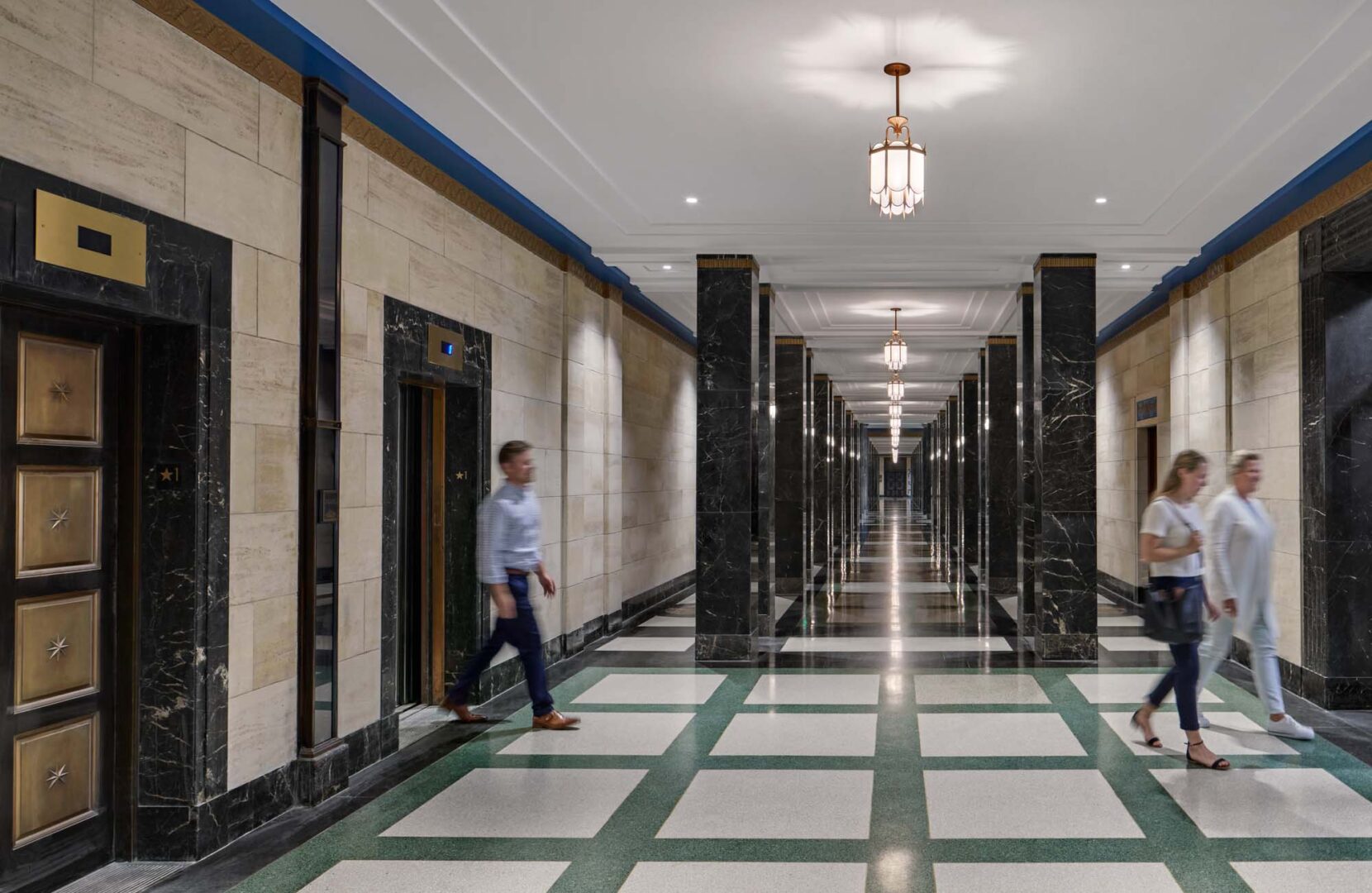
Historic elements including two monumental staircases and the art deco detailing and finishes of a major corridor were faithfully restored.
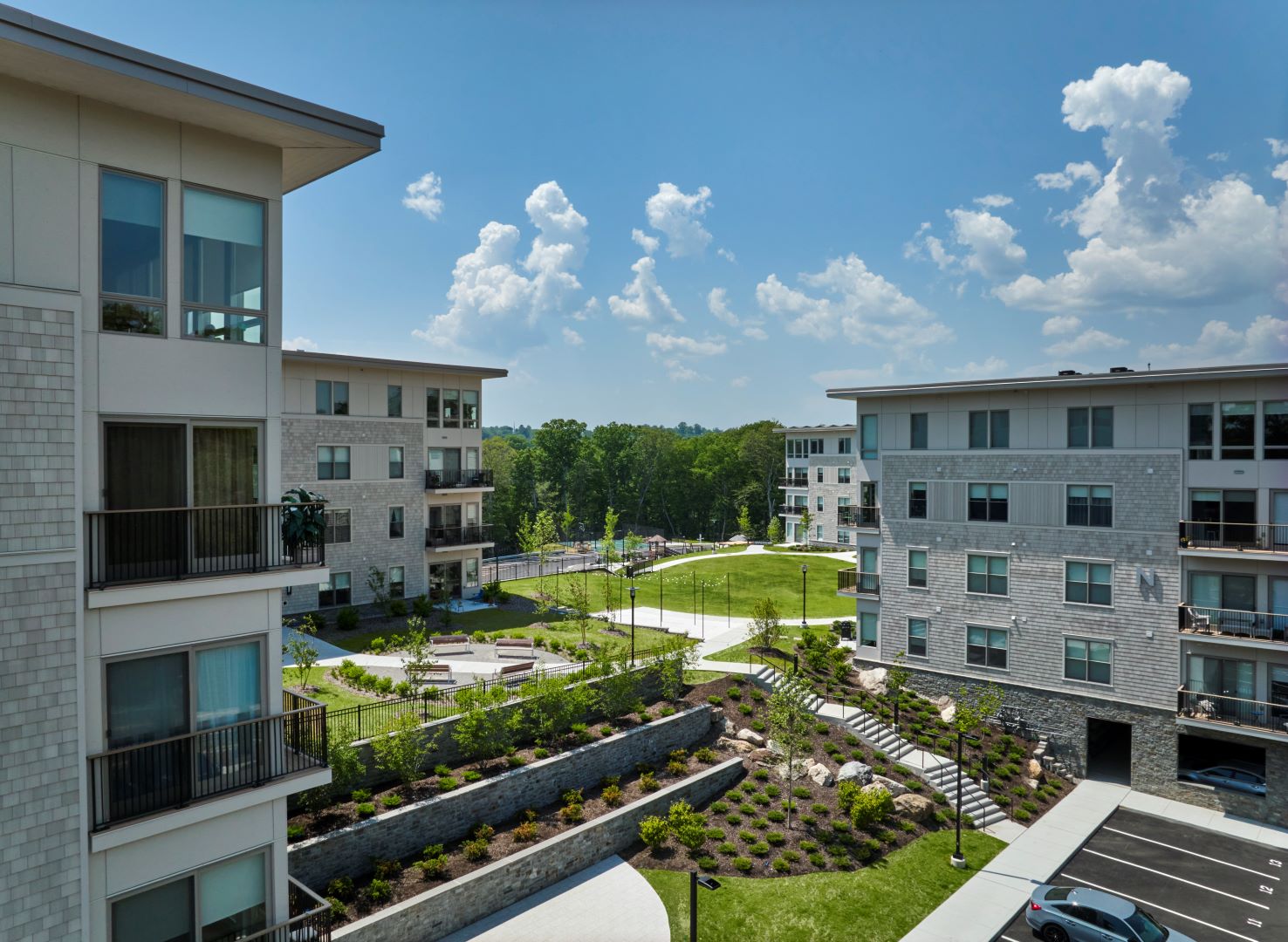
The overall scope included radical changes to common areas. A parking lot was transformed into a new urban green space featuring abstract mounds of grass and native plantings surrounding a paved plaza and bosque of ornamental trees. It is an oasis for individuals and programmed use. The conversion of non-usable courtyards at the center of the building into usable amenity space was also a major improvement. The courtyard walls have a new rainscreen wrap and the courtyard floor level raised to align with the lobby, building café, and meeting spaces. The lobby now celebrates arrival, highlights the structure’s civic function, serves as a crossroads for internal circulation, and as a place for gathering. A two-story “glass box” faces the green space and visually connects to the courtyard and new two-story lobby clad in white natural stone. Collectively, the spaces promote community and convey civic pride.
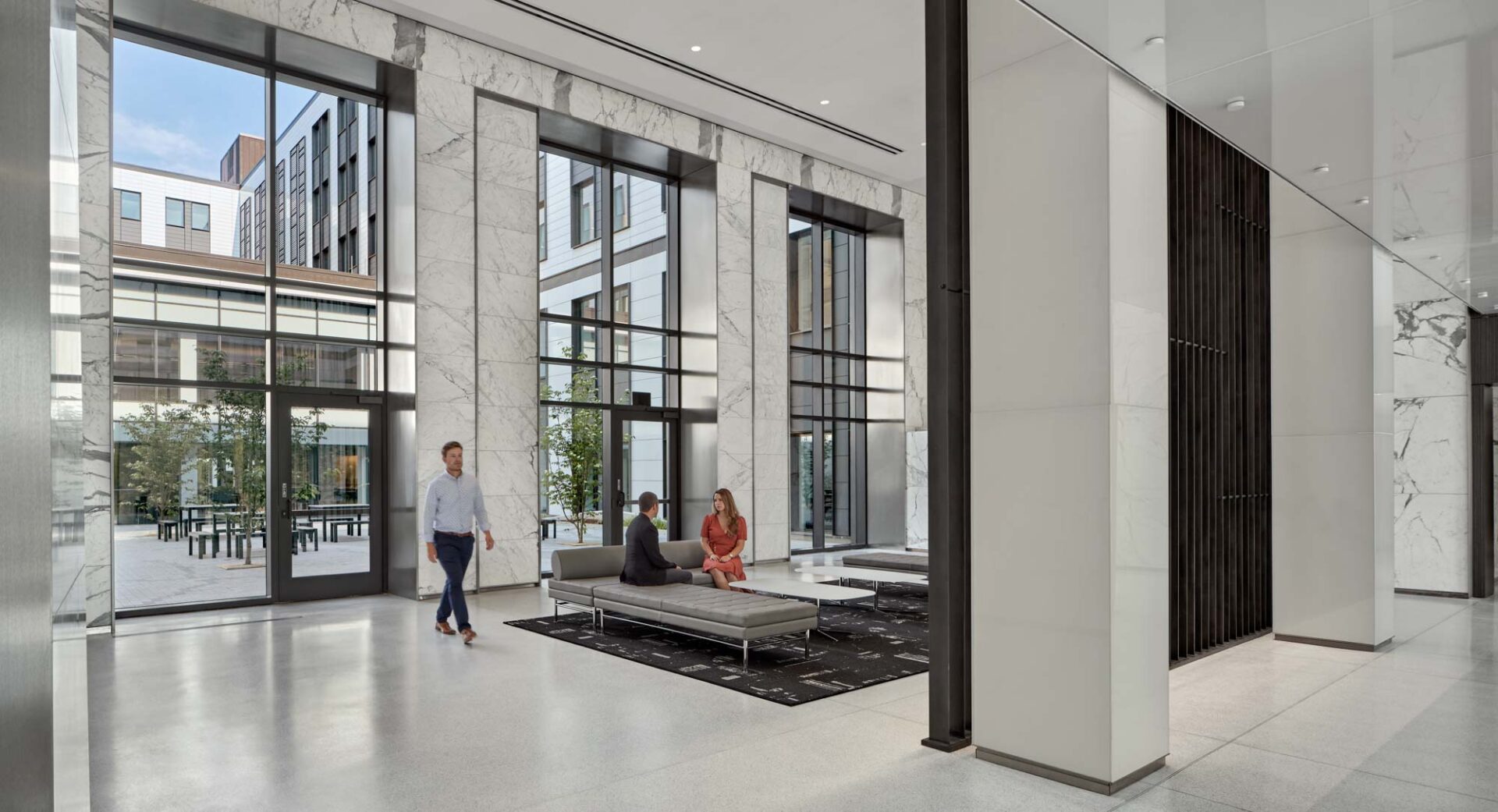
The lobby now celebrates arrival, highlights the structure’s civic function, serves as a crossroads for internal circulation, and as a place for gathering.
Measuring Success in Decades, Not Just Data Points
While the building achieved sustainability goals and reduced energy use intensity (EUI) by 55 percent – just 50.13 against a national average of 111.7 kBtu/sf/yr., the best measure of its success is people want to work and gather there. When we take on renovation projects meant to serve communities for generations, we cannot just update materials and systems, we must create spaces that accommodate change and environments that inspire continued use. We need to balance the environmental, economic, and social aspects of a project to produce solutions that provide long-term resiliency.